When I was 7, my family immigrated to the United States from India. That was 46 years ago, in 1980, and one of the first television images I remember is President Jimmy Carter looking visibly strained amid coverage of a crisis in the Middle East. Around the same time, I noticed a copy of TV Guide on my aunt’s coffee table with a bold, mysterious headline: “Who shot JR?” a reference to the hit network tv show Dallas. I didn’t know who JR was, but it quickly became clear that millions of Americans did and that they were paying attention.
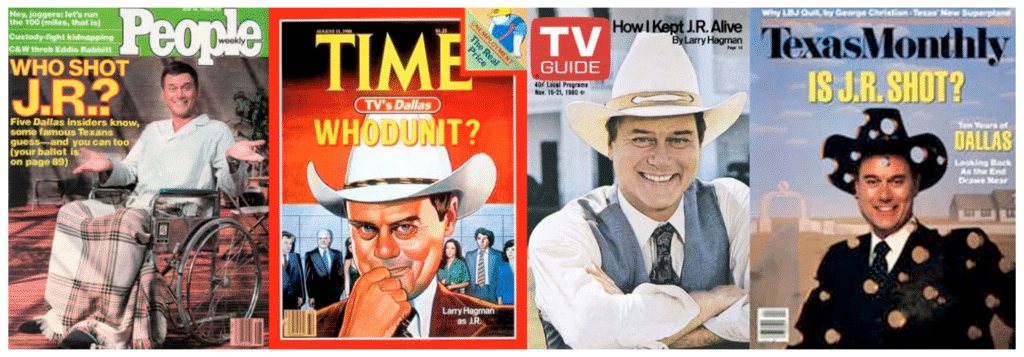
credit: www.todayinhistory.news
My memories of India were filled with people: relatives and friends visiting regularly, crowded streets, constant movement, the feeling of always being surrounded. Television was not central to daily life. Grandfathers were the only ones with time on their hands and they might glance at the Times of India to get a sense of what was happening in the world, but that was the extent of it.
After a few days at my aunt’s house in Cherry Hill, NJ, I began to notice that the TV was turned on every evening. There was a noticeable absence of people visiting or stopping by. In India, TV was just for the weekends or special events. On a visit to the grocery store at the checkout, I encountered something else: headlines. I observed my aunt sit in front of the TV every evening at 6:30 pm engrossed with Peter Jennings, the handsome anchor on ABC World News Tonight. There was a pattern now. On television, in magazines, in conversation, there was always something urgent demanding attention. Something to care about. Something to react to.
And yet, when most people tune in to the news, they are ultimately looking for answers to just a few basic questions: Are we safe? Is the economy ok so I can pay my bills? What do I need to know to take care of my family’s health? Are we taking steps to safeguard our planet for our grandchildren and future generations?
Between 1980 to 2026, the federal minimum wage has risen from $3.10 to only $7.10 (with states like California, New York and Washington pushing closer to $16.90). None of these are sufficient enough to live a decent life in this country. Meanwhile healthcare costs have increased by over 1300%, far outpacing inflation. Housing costs have increased 800%. And climate indicators continue to tell us we need to take serious action.
But these were not the issues dominating attention.
That was the beginning of my life in the United States, not just a new country, but a new relationship to attention itself.
Every decade since has seemed to come with its own defining issue, elevated into the center of public life. In the late twentieth century, queer visibility entered the mainstream, shaped in part by figures like Ellen DeGeneres, whose public coming out marked a cultural turning point. By the 2000s, the fight for marriage equality came to forefront culminating in Obergefell v. Hodges. Abortion rights remained a persistent fault line, especially around Roe v. Wade and its later reversal. Today, the spotlight has shifted toward transgender identity and rights.
These issues are real, and they matter deeply. But they also follow a pattern: they become the primary arenas of public conflict, absorbing attention and emotional energy in ways that leave broader structural concerns, healthcare, wages, climate fragmented and unresolved, even though these issues affect every ordinary American. From the moment I arrived in the United States, it has felt as though there is always something we are told to focus on next.
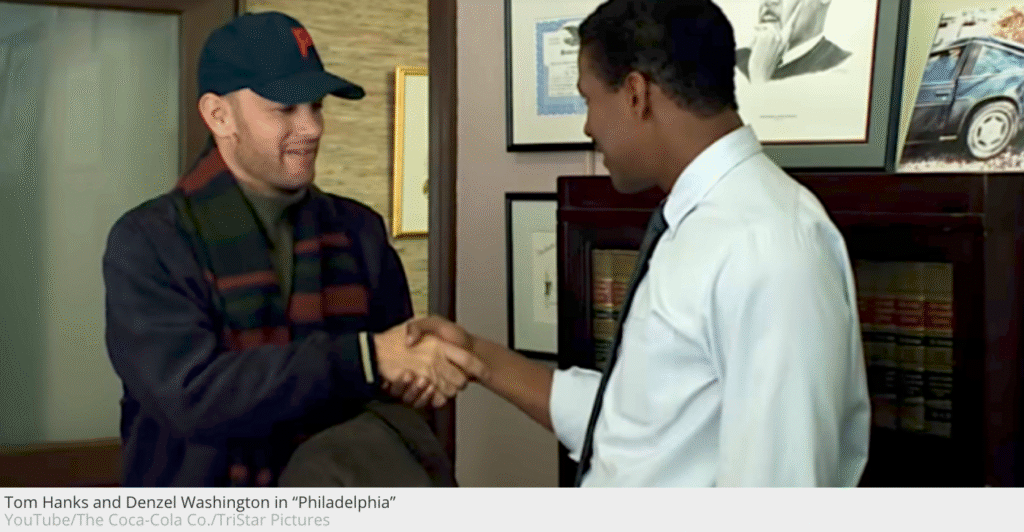
Throughout the 1980s, there was the stigmatization of gay men affected by the HIV/AIDS epidemic, often amplified through gossip media and celebrity culture. That cultural moment culminated in the film Philadelphia, starring Tom Hanks, Denzel Washington, Antonio Banderas, with Neil Young winning an Academy Award for “Streets of Philadelphia”. In April 1997, Ellen DeGeneres came out on her sitcom in a widely watched episode featuring Oprah Winfrey. For many, that moment marked a defining beginning of modern gay rights visibility.
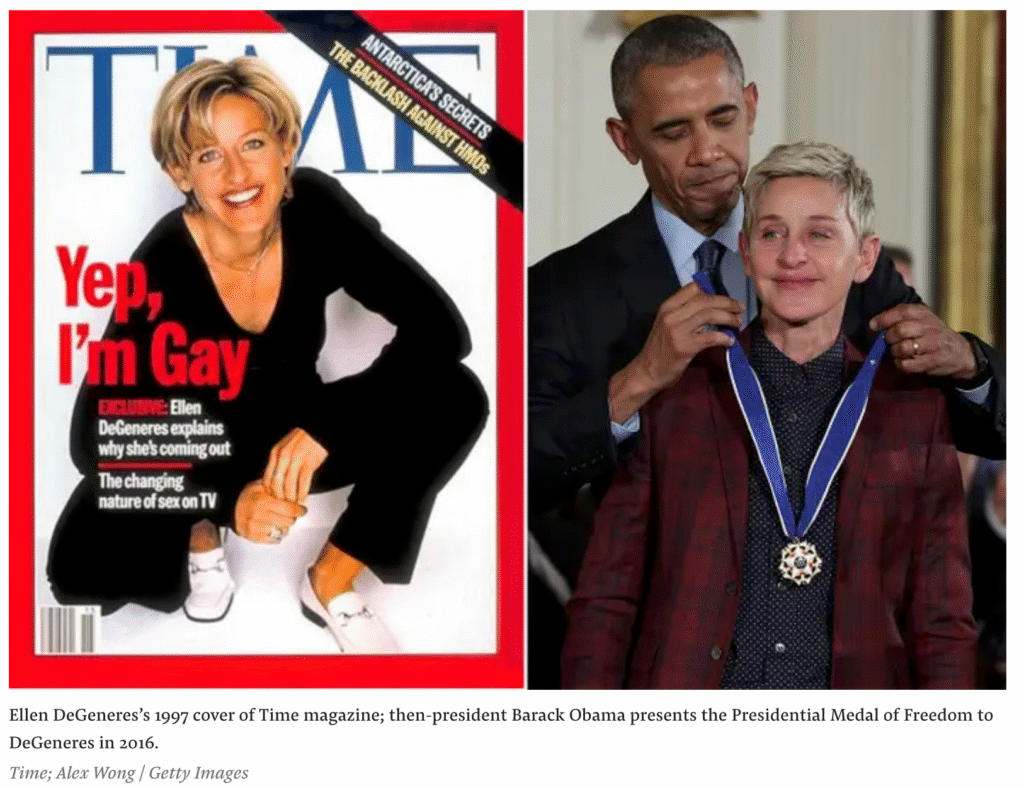
Over the last three decades, DeGeneres has navigated her celebrity status with extraordinary success, earning a place in the highest echelon of Hollywood. Yet during election cycles, her public positioning has often aligned with candidates who satisfy narrower priorities rather than advocating broad structural change for larger populations. This tension, between symbolic progress and systemic impact, appears again and again.
This pattern is not accidental. It is shaped by an ecosystem, media, celebrities, corporations, and political institutions, that depend on attention. And few figures move attention more effectively than celebrities.
But as visibility grows, so does distance. Success brings invitations into elite, often expensive, corporate-backed spaces. And with that shift comes a contradiction: the very audiences that helped build these figures may no longer be able to access them. What began as community becomes, over time, performance within exclusivity.
Right now, it’s April in Southern California, which means the Coachella Valley Music and Arts Festival. A two-weekend extravaganza where the average attendee can spend thousands on tickets, food, and lodging, while higher-tier experiences can reach into the hundreds of thousands. The event is owned by Philip Anschutz, whose political donations have supported MAGA and republicans who run at odds with many of the values represented on stage, particularly around LGBTQ+ rights, immigration rights and abortion access.
This year, alongside global stars like Justin Bieber and Sabrina Carpenter, up and coming queer artists such as Jane Remover and Ethel Cain, both of whom built their niche audiences through grassroots online communities took the stage. This raises a fundamental question: when artists rooted in accessibility step into highly exclusive spaces, who ultimately benefits, the performers, their original audiences, or the institutions behind the event?
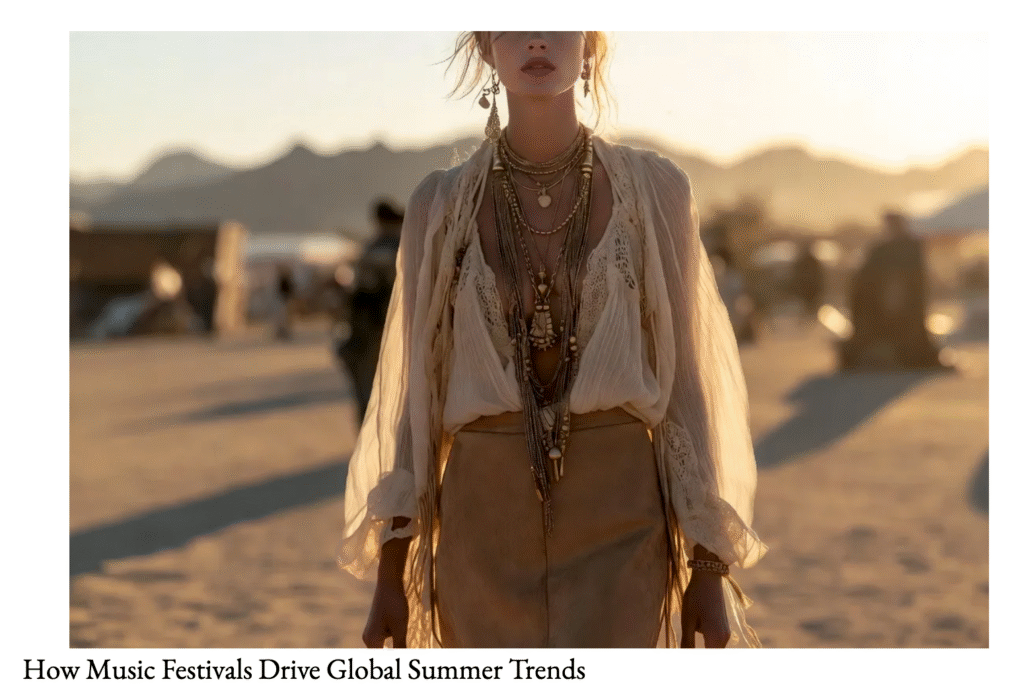
credit: https://www.runwaylive.com/inside-coachella-2026-fashion-the-celebrity-festival-looks.html
On one of the final nights, The Strokes, an American rock band, displayed visuals highlighting harms tied to U.S. actions abroad. The moment went viral and was praised as brave. But the audience had already paid, the performances were already delivered, and the profits had already been secured. The critique circulated but only after the system had done exactly what it was designed to do. Surprisingly, The Strokes then announced a new tour this summer produced by Goldenvoice which also produces Coachella. Fans will likely be seeing more of these visuals in the band’s concerts ahead and looks like The Strokes will not be blacklisted after all.
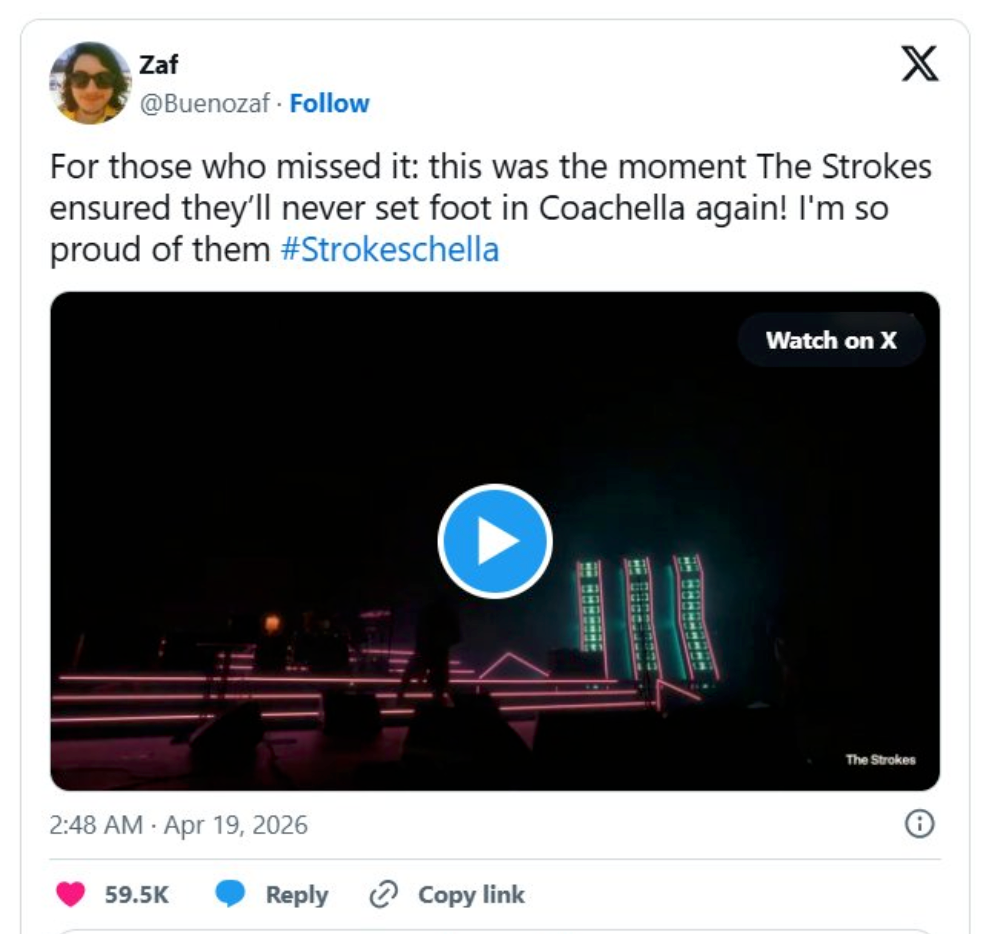
Credit: Twitter/X platform
There is another layer to this transformation. The credibility these figures earn, often through real risk, vulnerability or advocacy does not disappear. It accumulates. And over time, that accumulated trust can be redirected.
The turn-of-the-century sitcom Will & Grace helped normalize queer identity for mainstream audiences. It had the coveted spot on Thursday night right after the top show Friends on NBC. The groundbreaking show took on topics like gay rights, sexuality and parenthood among four friends living in NYC with lead actress in that show, Debra Messing, becoming closely associated with that cultural shift. The show’s success built a kind of goodwill, an emotional and cultural credibility rooted in representation, allyship, and humor resonated with millions.
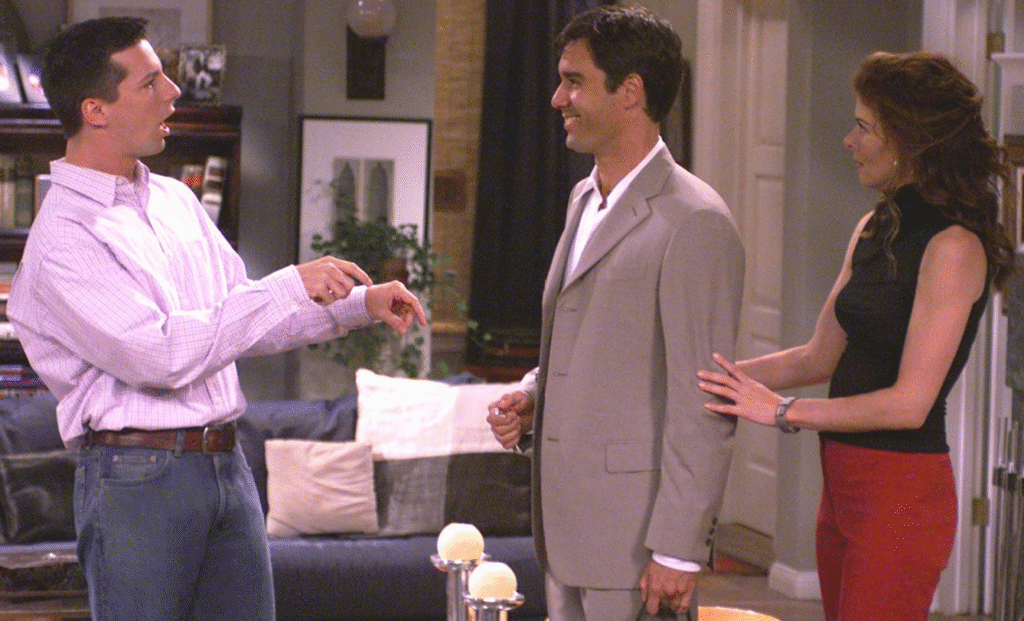
credit: Will & Grace NBC Universal. amazon.com
That credibility did not remain confined to entertainment. It carried over into political discourse.
During the 2020 presidential primary, Messing used her platform to strongly criticize Bernie Sanders, a candidate whose platform centered on universal healthcare, higher wages, and expansive climate policy. Her concern, expressed publicly, was that his candidacy might divide voters and weaken the eventual nominee’s chances against Donald Trump. But to many observers, the effect of that criticism, repeated across interviews and social media, was to help constrain a campaign that was explicitly focused on broad structural reform.
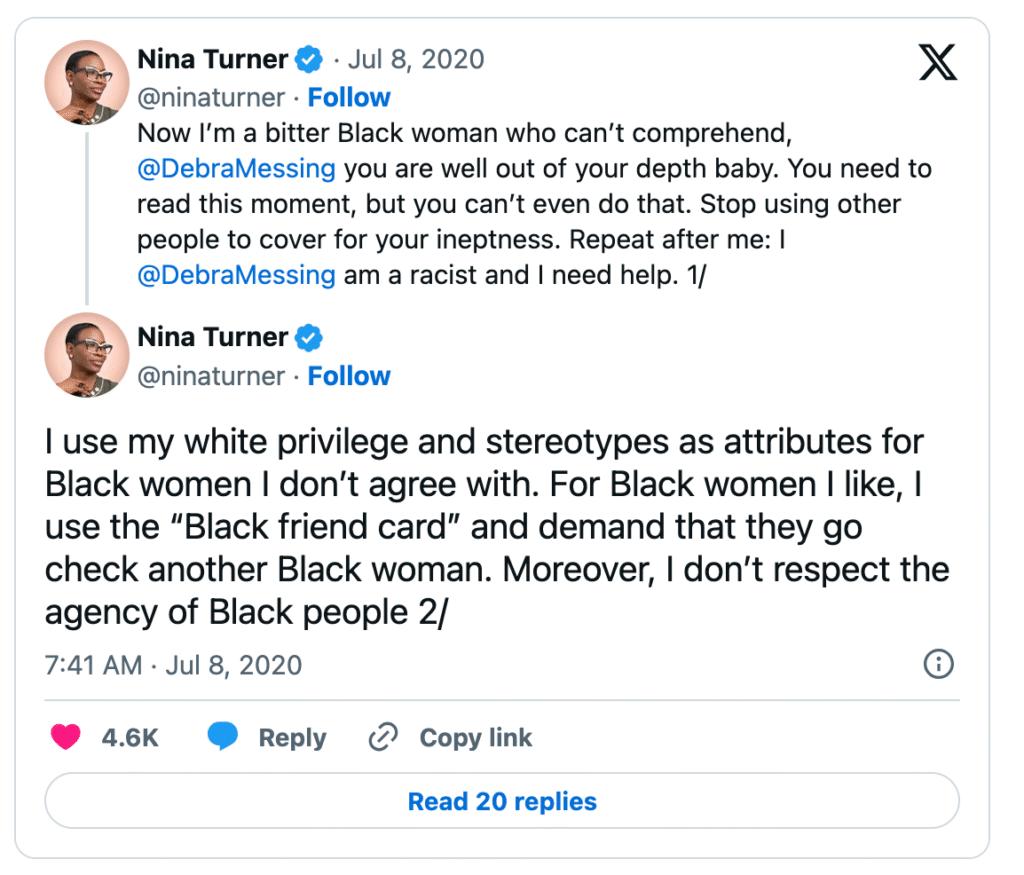
Nina Turner, national co-chair of Bernie Sanders 2020 Presidential Campaign. Here Nina calls out Debra Messing for disparaging black voters and treating them as a monolith.
A similar pattern emerged at the local level. In New York City politics, Messing directed sharp criticism toward the Mamdani’s mayoral campaign, which focused on affordability, childcare, protecting immigrants, and climate justice amongst other initiatives. Her rhetoric escalated to labeling him a “communist jihadist” language that stood in stark contrast to the inclusive, empathetic image she had built over many years.
What followed made that contrast even more noticeable. Months after the election, she continues to post about him frequently, even as his administration has introduced measures aimed at protecting LGBTQ+ communities and immigrants, issues she has previously described as deeply important. The inconsistency is hard to ignore. The concerns she once raised at the national level do not appear to be applied in the same way here.
Despite the tone and visibility of her criticism, there has been little sustained backlash from many of the same communities that once embraced her as an ally. That, in itself, is revealing. Despite some volatility, her Instagram followership has been stable over the last 3-4 years. She hasn’t been cancelled. Today, she continues to get work in Hollywood and ongoing financial opportunities.
These moments are not isolated controversies. They illustrate a broader dynamic: the way cultural credibility earned in one context, often through meaningful representation, can later be deployed in another, where the stakes are not symbolic but structural. The trust built with audiences during earlier moments of visibility does not disappear; it travels. And when it enters political arenas, it can shape outcomes in ways that can go against the material interests of the very audiences that helped create that trust.

Corporations complete the cycle. Companies like L’Oreal and Estee Lauder prominently feature inclusive imagery, embracing every identity, every gender, and every expression. On the surface, this signals progress. Lauder Group owns Estee Lauder, MAC cosmetics, Aveda and Bobbi Brown brands among others. It was widely reported that members of Lauder family who stand to inherit this billion dollar corporation donated millions to PACs (political action committees) working to defeat Mamdani’s campaign to be NYC mayor.
This demonstrates how corporate inclusion operates within limits. It is driven by market expansion, not structural change. The same corporate leadership and donor networks connected to these brands have, at times, supported political efforts that restrict rights or undermine protections for the very communities featured in their marketing and ad campaigns. Inclusion becomes a message while power operates elsewhere.
Within this environment, celebrities function as intermediaries. They translate lived experience into visibility. Corporations translate visibility into profit. Institutions translate trust into influence.
And increasingly, celebrities act as a kind of pied piper, guiding their faithful audiences toward the next issue, the next concern, the next space where attention can be directed.
But things are slowly shifting.
Just a few days ago, the A-list Hollywood actress, Reese Witherspoon, known for building female-centered stories and communities while building a book empire, confidently posted about the importance of understanding artificial intelligence and sweetly persuaded her loyal audience that it was time to learn. What happened next was surprising.
Immediately, the comments pushed back. Many of the responses expressed concern about AI itself, its risks, its implications. Others questioned whether the post was tied to undisclosed sponsorship. The comments kept going. A mini PR nightmare for a major hollywood star! What stood out was the disconnect: a platform built around storytelling and shared experience suddenly directed attention toward a complex technological domain, without clear context for why.
It is a small example, but a current one. A trusted voice introduces a new focal point. The audience is invited to follow.
Meanwhile, a broader pattern remains unchanged. Public attention cycles from one defining issue to the next, each one urgent, each one consuming, each one leaving deeper structural questions only partially addressed, healthcare, wages and climate.
This is not a conspiracy. It is a system of incentives working exactly as designed.
David Sirota, a journalist and strategist who has worked closely with progressive campaigns including Bernie Sander’s presidential campaigns, explores these dynamics in his podcast Master Plan. He argues that over the last fifty years, beginning with the Powell Memo, the modern attention economy was engineered to keep Americans in a “Goldfish Brain” state: a constant stream of news, social media, and celebrity commentary that fragments memory, obscures long-term issues, and normalizes corruption. Sirota shows how distraction, media consolidation and the flooding of money into politics guide public focus toward the next urgent moment while leaving structural problems unresolved.
The challenge, then, is simple and urgent: to notice not just what demands our attention, but what the system has trained us to forget.
Leave a Reply